
At the second Africa Urban Forum in Nairobi, Kenya, the UN-Habitat-facilitated Global Water Operators’ Partnerships Alliance (GWOPA) highlighted that cities will not achieve adequate housing, transform informal settlements or build resilience needed unless water and sanitation utilities are brought fully into urban planning and decision-making.
Held from 8 to 10 April under the theme “Adequate Housing for All: Advancing Socio-economic and Environmental Transformation towards the Realization of Agenda 2063”, the forum, co-organized by UN-Habitat, brought together UN entities, ministers, mayors, development finance institutions and urban actors to shape African priorities ahead of global urban and water discussions, such as the thirteenth session of the World Urban Forum (WUF13) in May in Baku, Azerbaijan, and the 2026 UN Water Conference in December in the United Arab Emirates.
That message came through in two high-level discussions – one on informal settlement transformation and another one on water-responsive urbanism and investment. Across both, GWOPA utility representatives argued that stronger cities depend on stronger local service providers, and that progress on water, sanitation, housing and climate resilience needs to be pursued together.
The first session, “Water-responsive Urbanism: Private Sector Dialogue for African Cities”, took place on 9 April and was led by the African Union with UN-Habitat, the United Nations Environment Programme (UNEP), the United Nations Development Programme (UNDP) and the United Nations Office for Disaster Risk Reduction (UNDRR) among the co-organizers. The discussion focused on how to position water-responsive urbanism as an investment-ready proposition and how to connect city priorities with private capital, foundations and climate finance.
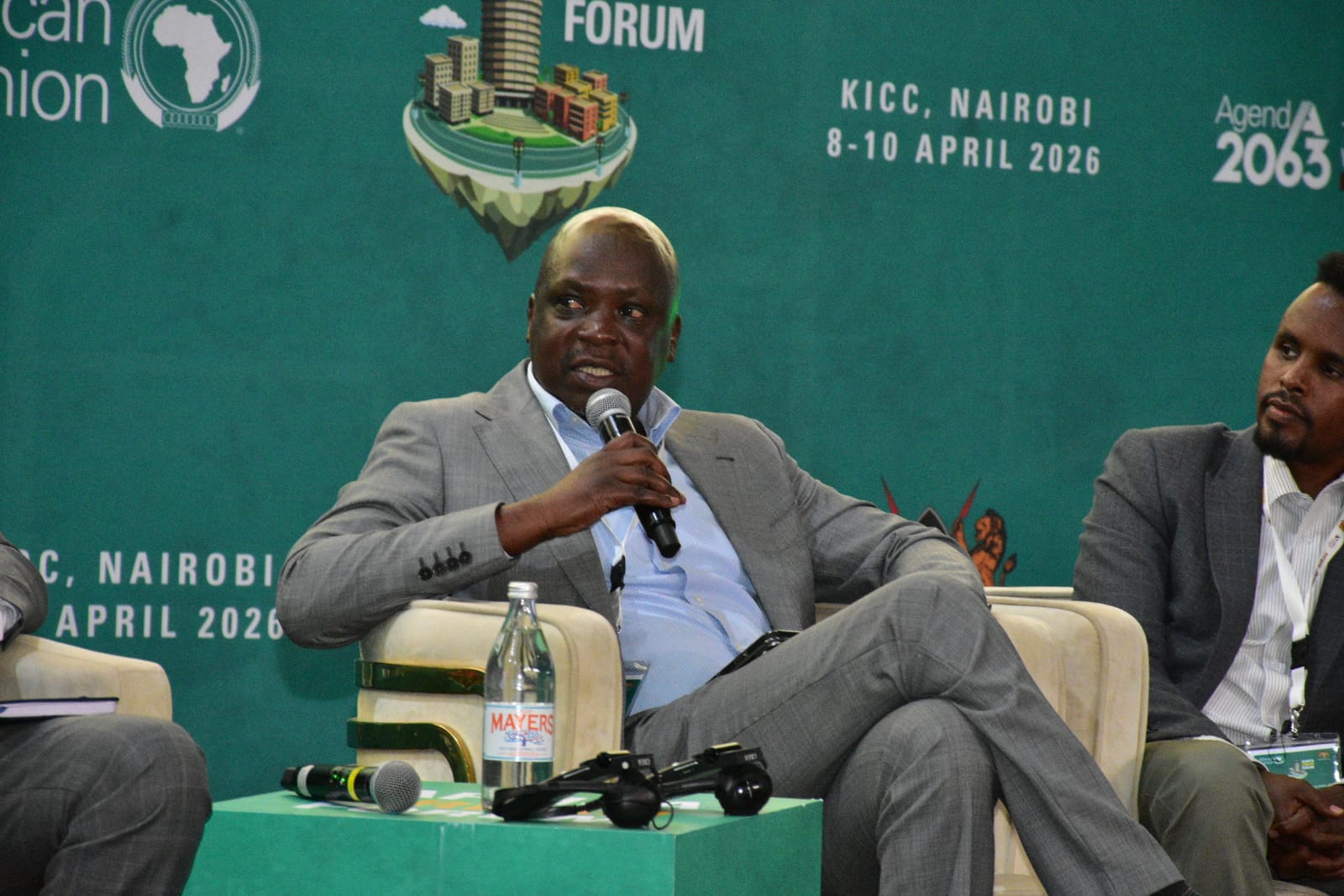
Thomas Odongo, Managing Director of the Kisumu Water and Sanitation Company (KIWASCO) and GWOPA Steering Committee representative for African public utilities, called for utilities to be seen not only as operators of infrastructure, but as strategic institutions in urban growth and resilience. He underscored that investment readiness is about more than engineering plans. It also depends on strong utility performance, credible planning, workable financing models and partnerships that build operational capacity over time.
That position reflects one of GWOPA’s central messages ahead of the 2026 United Nations Water Conference: infrastructure alone does not deliver sustainable results. Services improve and investments endure when the utilities responsible for operating and maintaining systems have the skills, systems and institutional support to do so. Through Water Operators’ Partnerships – solidarity-based, not-for-profit peer exchanges between service providers – GWOPA argues that utilities can strengthen performance, improve efficiency, expand service coverage and build the foundations for longer-term transformation.
“Integrating public utilities in urban planning is not an option, but essential. [...] This will enable utilities to deliver resilient, inclusive and investment-ready water and sanitation systems, the core enablers and accelerators of development,” Odongo said.
In the session “An Integrated Approach for Transformation of Informal Settlements”, held on 10 April and led by Habitat for Humanity and co-organized by UN-Habitat, participants examined how African countries can move beyond fragmented interventions towards integrated, citywide approaches linking housing, land tenure, service delivery, climate resilience and finance.
Speaking on behalf of African public water and sanitation utilities on the GWOPA Steering Committee, Esther Ngugi, Corporate Planning and Strategy Officer at Nyeri Water and Sanitation Company (NYEWASCO), said utilities are still too often absent from urban development and housing discussions, despite being essential to whether improvements last.
She stressed that upgrading slums and informal settlements cannot be sustained if water and sanitation operators are brought in only after plans have been made. In practice, she argued, adequate housing depends not only on structures and land arrangements, but on reliable, safe and affordable services delivered by institutions with the mandate and capacity to operate them over time.
To illustrate the point, Ngugi pointed to the GWOPA Pro-Poor WASH Access in Kenya project, led by Kisumu Water and Sanitation Company (KIWASCO) in partnership with the Dutch non-governmental organization SIMAVI and the Water and Sanitation Providers Association (WASPA), with financial support from the European Union through the GWOPA-managed EU Water Operators’ Partnerships Programme. Between 2022 and 2025, five Kenyan utilities reached nearly 300,000 people in low-income areas with water and sanitation services, surpassing their target by 14 per cent. Over the same time, average pro-poor service delivery scores rose from 52 per cent to 84 per cent.
The results were not only technical but also institutional. Dedicated pro-poor units, social connection policies, pro-poor tariffs and ring-fenced budgets for low-income areas helped embed more equitable service delivery in utility practice. For GWOPA, this reflects a broader principle: durable urban progress depends on strengthening the public institutions responsible for delivering basic services, especially in underserved areas.
“Driven by the aspirations of Agenda 2063, we recognize that water and sanitation are inseparable from housing,” Ngugi said. “To achieve 'The Africa We Want,' we must adopt an integrated 3Ps approach: 'Plan' together with the water and sanitation utilities, 'Partner' early with them and build better for 'People'.”
Ngugi also linked the discussion in Nairobi to a wider global picture. According to the Global Outlook on Water and Sanitation Service Providers, the world depends on at least 285,000 water and sanitation utilities worldwide to provide essential services, a figure that underscores both the scale and the strategic importance of these institutions. Yet many utilities, particularly in low- and middle-income countries, remain under-resourced and under-recognized, even as they are expected to deliver on public health, climate resilience and the human rights to water and sanitation.
The Nairobi discussions helped build momentum towards WUF13, where water and sanitation service providers are set to be recognized for the first time, along with other basic service providers, through a dedicated stakeholder group. For GWOPA, that marks an important step in ensuring utilities have a stronger voice in global urban policy debates, especially as governments and partners look for practical ways to advance both Sustainable Development Goal 6 on water and sanitation and Sustainable Development Goal 11 on sustainable cities.