The Water Operators’ Partnership between Hamburg Wasser, Germany, and eThekwini, South Africa, has shown how utility-to-utility cooperation can translate operational exchange into measurable results, from cutting water losses to advancing work on wastewater and resource recovery. As the first phase concluded in 2025, the partnership stood out for pairing practical improvements on the ground with broader institutional strengthening. The cooperation is now set to continue under a new partnership in the European Union Water Operators’ Partnership Programme 2 until 2030.
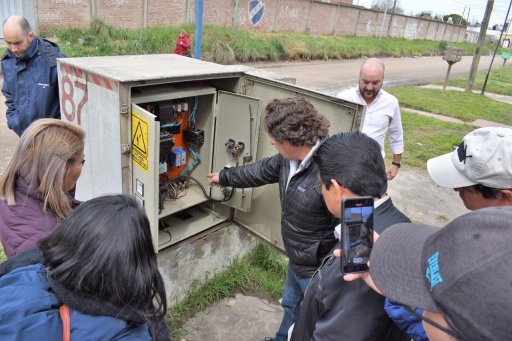
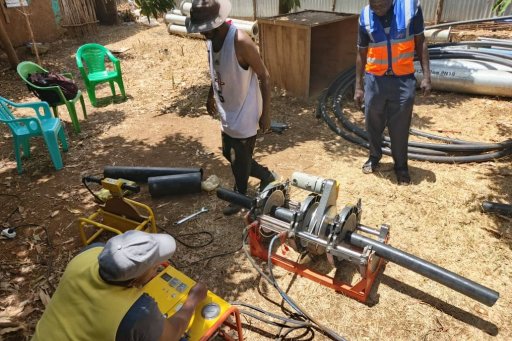
One of the clearest results from the first phase was a 5 per cent reduction in non-revenue water across targeted areas. Funded by the European Union and managed by UN-Habitat’s Global Water Operators’ Partnerships Alliance, the partnership also supported 95 per cent completion of geographic information system mapping for key distribution networks, strengthening monitoring, maintenance planning and infrastructure management. At strategic network control nodes, new tools for flow and pressure monitoring were installed, giving teams real-time data to support water balancing and operational decision-making. Community sensitisation programmes also reached more than 2,000 residents, while behaviour change campaigns were carried out across 110 wards.
The gains went beyond technical upgrades. By embedding peer exchange into day-to-day operations and promoting joint problem-solving, the partnership helped strengthen institutional capacity within eThekwini and build a stronger culture of innovation and continuous improvement. In turn, this has enhanced the municipality’s ability to manage water and sanitation systems more effectively over the long term and reinforced its role as a regional reference point for more sustainable utility practice.
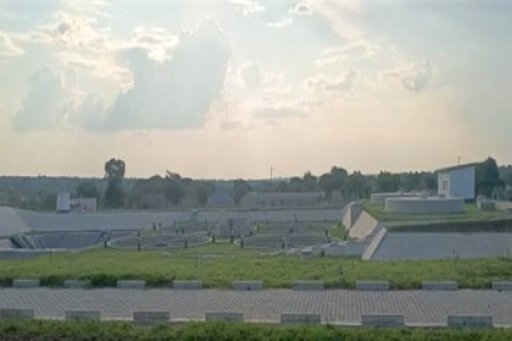
The cooperation has also extended into wastewater and sanitation, where Hamburg Wasser has brought experience that is particularly relevant to utilities seeking more circular and climate-resilient operations. At Hamburg’s Köhlbrandhöft/Dradenau wastewater treatment plant, long-term investments in sludge digestion, biogas upgrading, wind energy and energy-efficiency measures have enabled the facility to generate around 130 GWh of electricity and 80 GWh of heat each year, exceeding its own energy needs. Up to 10 million cubic metres of biogas are also upgraded annually into biomethane for injection into the gas grid.
That experience has been shared through peer learning and practical exchange rather than as a blueprint. In June 2025, wastewater and non-revenue water teams from eThekwini travelled to Hamburg for a week-long exposure visit, where they engaged directly with Hamburg Wasser’s operations and explored approaches to energy and resource recovery in wastewater systems. Materials from the visit stressed that such progress depends not only on infrastructure, but also on skilled operators, vocational training and continuous knowledge exchange.
“Hamburg Wasser’s role in this partnership has been to contribute practical experience in a spirit of peer exchange,” said Jens Rothsprack, Head of Shift Operations at the Köhlbrandhöft/Dradenau wastewater treatment plant of Hamburg Wasser. “The progress made shows that when utilities work together over time, they can co-create solutions that strengthen performance and support longer-term transformation.”
For eThekwini, the partnership has shown what sustained cooperation between public utilities can make possible across both technical and community-facing work. “This partnership has helped turn shared expertise into concrete progress, from non-revenue water reduction to stronger systems for planning and operations,” said Pinky Kunene, Project Executive in the Office of the Head of Water and Sanitation at eThekwini Water and Sanitation. “What matters most is that the solutions have been developed through collaboration and can continue to grow in the next phase.”
With the first phase completed in 2025 and a new partnership foreseen under EU-WOP 2, Hamburg Wasser and eThekwini now offer an example of how Water Operators’ Partnerships can move beyond short-term exchange towards longer-term cooperation shaped by trust, practical learning and shared public service goals.