
Water at the Heart of the Urban Agenda
Thursday 21 May, Baku, Azerbaijan
Convening at the World Urban Forum in Baku, GWOPA members and partners, UN leadership, development partners, city representatives, community advocates and financing institutions discussed the urban housing road map towards the UN 2026 Water Conference, to be convened in United Arab Emirates from 8-10 December 2026.
The session's central message was as clear and urgent: housing, water, sanitation, land and slum transformation cannot be addressed in silos — and the world's major policy processes must finally reflect that reality.
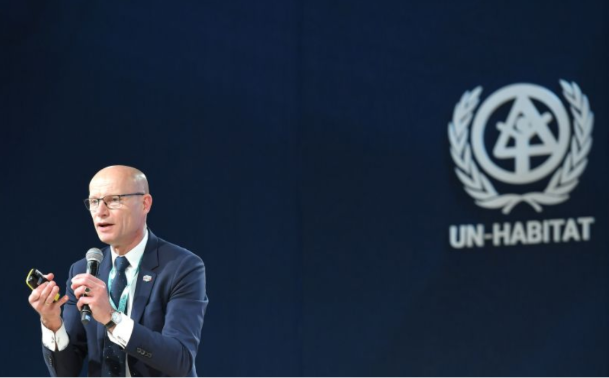
Henk Ovink, Executive Director and Commissioner of the Global Commission on the Economics of Water, opened the substantive debate with a compelling reframing of water as a systems challenge — not simply an infrastructure or sector issue, but a governance challenge and a spatial and urban development imperative. He underscored that water is the connective tissue of every major challenge cities face today: food security, climate resilience, biodiversity, energy and economic productivity.
"Water and cities must be brought together more deliberately in global discussions, so that the urban agenda can help shape the outcomes of the 2026 United Nations Water Conference."
GWOPA's Role: Getting Water to Those Most in Need
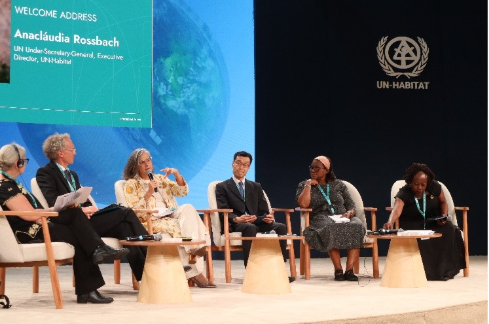
Anacláudia Rossbach, Executive Director of UN-Habitat, stressed the fundamental and indivisible relationship between water, sanitation and adequate housing. She drew a direct line from the session theme to lived reality: when settlements grow faster than services can reach them, slums inevitably follow. Her intervention connected three strategic frameworks — the priorities of the World Urban Forum, UN-Habitat's Strategic Plan, and the upcoming 2026 UN Water Conference — and placed GWOPA squarely at the centre of this convergence.
"GWOPA plays a vital role in ensuring that water reaches those most in need, through the sharing of knowledge, expertise and practical capacity among water and sanitation operators."
She called for bringing local governments, communities and service providers into more integrated governance of water and urban development — echoing the broader WUF13 theme of localization as a driver of SDG delivery.
Mobilizing momentum and partnerships toward Abu Dhabi and Mexico City at WUF 14
Rocío Lombera González, General Coordinator for International Affairs, Government of Mexico City, and— host city of the next World Urban Forum in 2028 — spoke with urgency about the paradox of a city built over water yet struggling to secure it equitably for all its residents. She affirmed water as a common good and a fundamental human right, and highlighted the deep inequalities faced by communities in informal settlements. Mexico City's experience of citywide water management, linking housing, land and water security, offered both a cautionary tale and a model for integrated action.
Sebastian Herold of Germany's Federal Ministry for Economic Cooperation and Development (BMZ) highlighted the decisive policy and financing shifts needed to embed water and sanitation at the core of housing, land governance and informal settlement upgrading. He underscored Germany's commitment to integrated urban development and the importance of strong utility institutions in sustaining service delivery beyond project cycles.
Norio Saito of the Asian Development Bank reinforced this systems-level perspective. Drawing on ADB's experience across Asia, he argued that housing, water, sanitation, drainage, waste and transport must be conceived and financed as a single urban ecosystem — not as competing priorities. He pointed to proven financing models that integrate water and sanitation as core components of slum upgrading, while maintaining affordability for low-income households.
Rose Molokoane of Slum Dwellers International brought the conversation back to the communities most directly affected. Her message was unambiguous: well-crafted policies must translate into real action on the ground for the hundreds of millions who still lack safe water and sanitation. This is the accountability that ultimately matters.
A Unified Message from Baku
Simon Springett, United Nations Resident Coordinator for Barbados and the Eastern Caribbean, distilled the session's shared conclusions. He affirmed that housing, water, sanitation, land and slum transformation are inseparable challenges that demand integrated, citywide responses built on empowered local governments, strong utilities and coherent national systems.
"From Baku, we affirm that adequate housing, water, sanitation, land and slum transformation are inseparable — and must be delivered through integrated, citywide approaches that leave no one behind."
His closing call to action was directed at the full range of actors in the room and beyond: UN agencies, governments, development banks and partners must use the window between WUF13 and Abu Dhabi to scale integrated financing, strengthen local capacity, and deliver tangible improvements in housing and water and sanitation for communities currently left behind.
Rose Christine Kaggwa, Chair of the GWOPA Assembly, and National Water and Sewerage Corporation, Uganda concluded with a clear and action-oriented agenda: WUF13 as a pivotal milestone that moves the global urban agenda from commitments to delivery, directly shaping housing priorities and momentum toward the 2026 UN Water Conference in Abu Dhabi, hosted by the UAE.
Looking Ahead: Abu Dhabi, December 2026
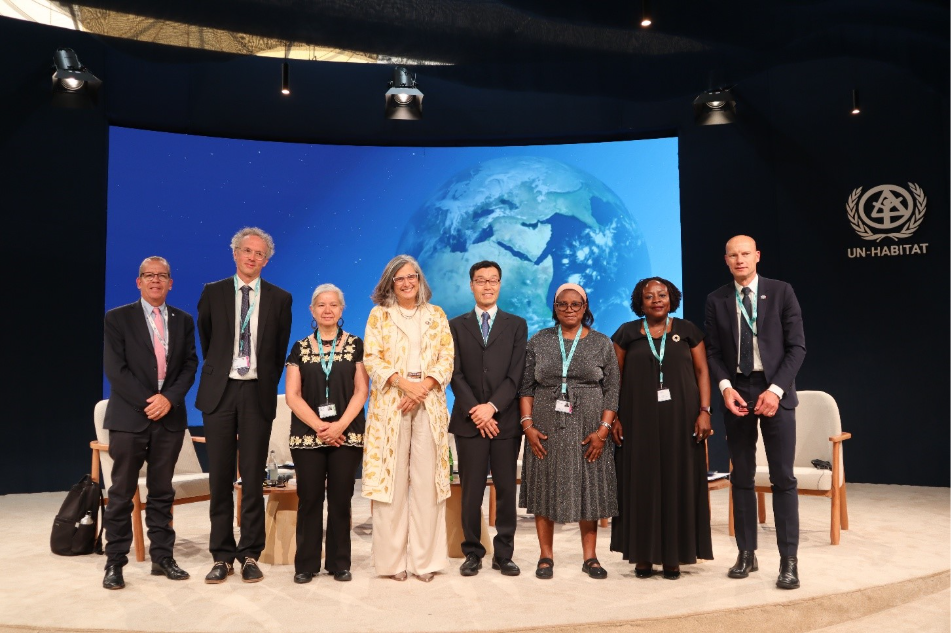
The session in Baku marked a pivotal milestone on the road to the 2026 United Nations Water Conference. GWOPA and UN-Habitat will continue to mobilize water and sanitation representatives, members and partners to advance integrated water-urban solutions, ensuring the voices of cities, utilities and communities shape outcomes in Abu Dhabi.
